

 by Nevtechzone Team
 0 comments
Most Kenyan businesses don't have a shortage of enquiries. They have a follow-up problem.
A customer sends a WhatsApp message on Saturday evening. Someone calls while the sales person is driving. A form comes in through the website and lands in an inbox nobody checks. A comment on a Facebook ad asks "how much?" and gets an answer three days later — by which time the customer has bought from someone who replied in ten minutes.
None of these people said no. They were simply never followed up. The good news is that this is one of the cheapest problems in business to fix. Here are five habits that make the difference.
1. Know every place a customer can reach you
Start by writing the list. For most businesses it looks something like this:
- WhatsApp (often more than one number — the business line and staff phones)
- Phone calls, including missed calls
- Your website's contact or quote form
- Facebook and Instagram messages and comments
- Walk-ins and referrals
Then ask, for each one: who checks it, and how often? If the honest answer is "whoever sees it first" or "when we remember", that channel is leaking customers.
2. Reply fast — the first reply matters most
When someone contacts you, they are usually contacting your competitors too. The business that replies first, with something useful, starts the conversation in the lead.
A fast reply doesn't have to be a full answer. "Thanks for reaching out — yes, we do that. Can I ask a couple of questions so I can give you an accurate price?" keeps the customer with you while you prepare the details.
Practical ways to speed up:
- Use WhatsApp Business quick replies for the questions you get every day (prices, location, opening hours).
- Set an away message for evenings and weekends that says when you'll reply — and then keep that promise.
- Agree a simple rule in the team, such as "every enquiry gets a first reply within one hour during working hours".
3. Give every lead an owner
"The team will handle it" usually means nobody does. Every new enquiry should belong to one named person who is responsible until the customer either buys or clearly says no.
This also solves a common problem: two staff members replying to the same customer with different prices, or each assuming the other one called back.
4. Write down the next step — with a date
The difference between a business that converts enquiries and one that doesn't is rarely the sales pitch. It's the follow-up.
After every conversation, record three things:
- What the customer wants (product, quantity, budget, timeline)
- What happens next (send a quotation, book a site visit, call back after payday)
- When (an actual date)
Many sales are closed on the second, third or fourth contact. A customer who said "let me think about it" in March may be ready in April — if someone calls.
5. Track where your customers come from
If you spend money on Facebook ads, Google ads, radio, or a stand at an expo, you should be able to answer a simple question: how many paying customers did that bring in?
Ask every new lead "how did you hear about us?" and record the answer. After a few months you will know which marketing actually works — and which you can stop paying for.
Spreadsheet, notebook or CRM?
You can start all five habits with a shared spreadsheet or even a notebook. For a small team with a handful of enquiries a week, that may be enough.
It stops working when:
- enquiries arrive faster than one person can track,
- several people reply from different phones,
- you can't see at a glance who hasn't been called back, or
- you want reports on which campaigns bring in sales.
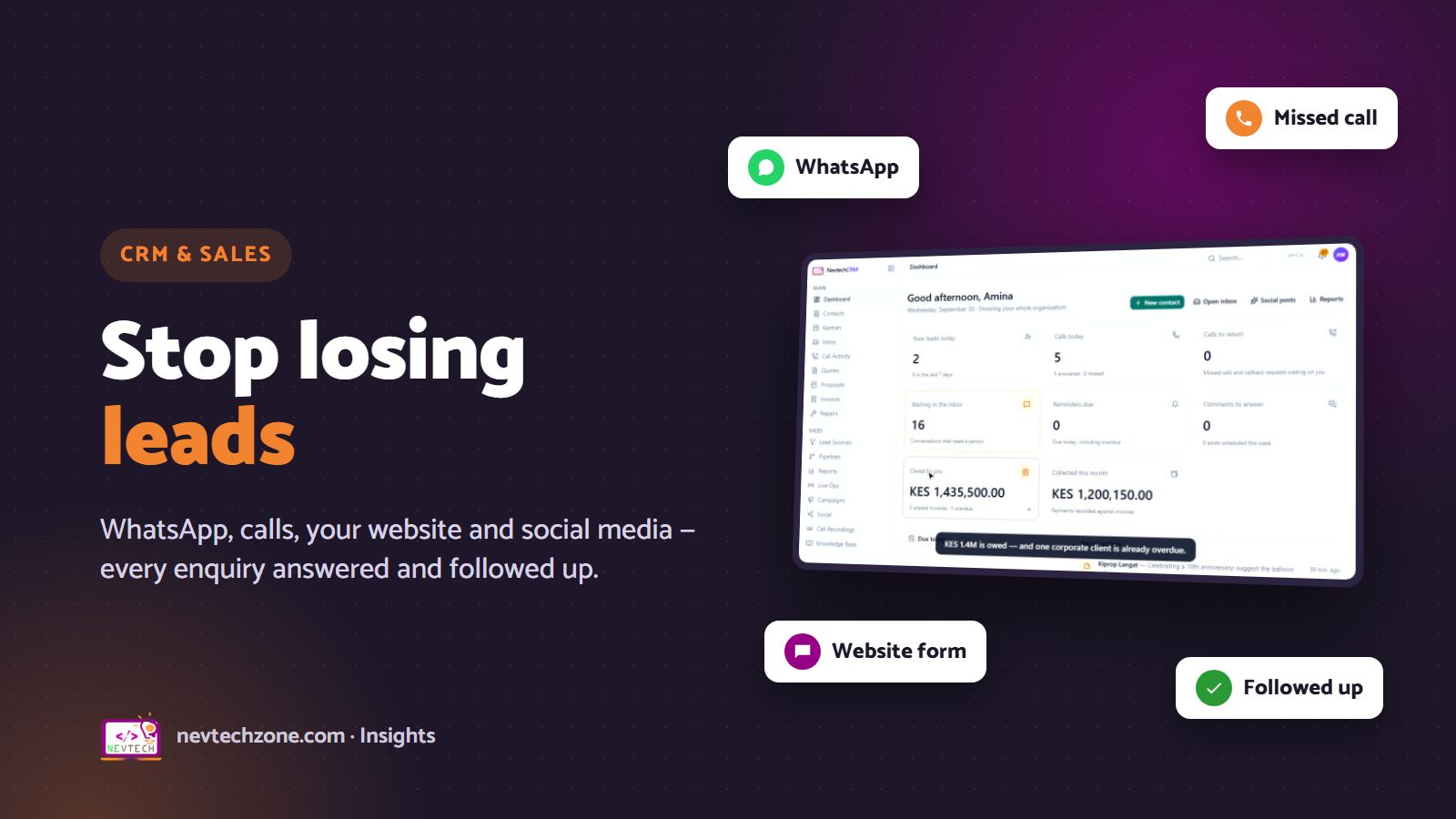
That is the point where a CRM (customer relationship management system) pays for itself. A good one puts WhatsApp, calls, web forms and social media enquiries in one place, assigns each lead to a person, reminds them to follow up, and shows you where your customers come from.
How we can help
We built NevtechCRM for exactly this: Kenyan businesses whose customers reach them on WhatsApp, by phone, through the website and on social media. Every enquiry lands in one inbox, gets an owner and a follow-up reminder, and your reports show which channels bring in sales.
If you'd like to see it working with examples from your own business, book a free demo — or talk to us about fixing your follow-up, whatever tools you use.
Latest Posts
Let’s talk about your business
Book a free 30-minute consultation — we’ll look at your technology and marketing and tell you honestly what will help.
0 Comments